Skip to content

Meet NIS2 Data Security Compliance Requirements

NIS2 Compliance Solution

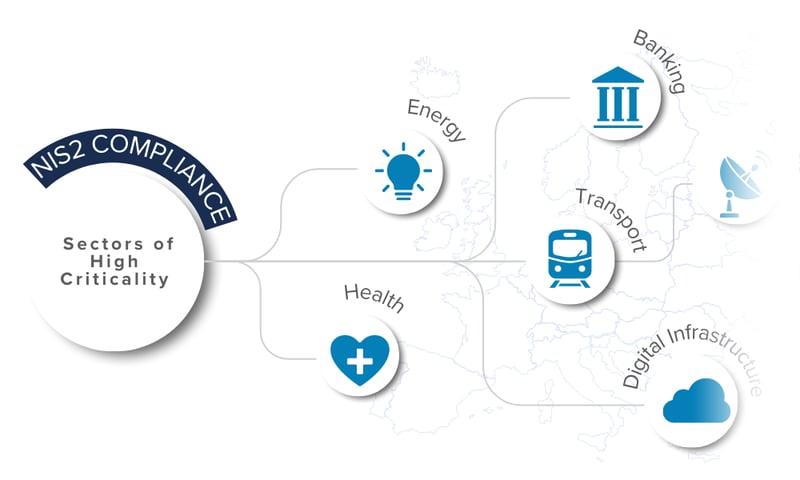
NIS2 raises the bar on how regulated organizations protect sensitive data across cloud platforms, SaaS applications, and digital supply chains. Its focus is the security and resilience of network and information systems that support essential and important services.
StratoKey provides data-centric security controls that directly support NIS2 requirements for risk management, access control, encryption, and supply chain security.

Learn How StratoKey Can Help Support NIS2 Compliance

Please provide details so we can best assist you.

NIS2 Technical Controls for Data Protection

StratoKey’s Cloud Data Protection Platform is deployed within your environment to help enforce NIS2-aligned technical controls for data protection and risk reduction. Sensitive and regulated data is encrypted or tokenized before it is transmitted to SaaS platforms, cloud services, APIs, or third-party systems.

Regulated data remains under your control, while external platforms operate only on protected surrogate values.

  • 1Deploy the StratoKey CDP Gateway within your authorized environment for full key and cryptographic control.
  • 2Keep all regulated data stored inside your sovereign environment.
  • 3Send only encrypted values or tokenized surrogates to SaaS platforms; no plaintext leaves your boundary.
  • 4Meet NIS2 technical requirements by preventing SaaS platforms and foreign service providers from processing or storing regulated data in plaintext.

NIS2 Technical Control Mapping

StratoKey supports NIS2 by delivering enforceable technical and cryptographic controls aligned to Article 21 risk-management measures, particularly for data protection, access control, integrations, and supply-chain exposure.

NIS2 Article Requirement Description StratoKey Technical Controls Benefit

Article 20

Governance

Management bodies must approve, oversee, and be accountable for cybersecurity risk-management measures. Applies encryption and tokenization at the data layer before data enters cloud or SaaS systems, providing measurable and controlled risk reduction rather than policy-only controls. Executive accountability supported by enforceable technical controls.

Article 21(1)

Cybersecurity risk-management measures

Organizations must implement appropriate and proportionate technical measures to manage cyber risk. Protects sensitive data before it is transmitted to SaaS, cloud, or third-party platforms. Can either tokenize (keeping regulated data within sovereign boundaries) or end-to-end encrypt. Reduced systemic risk across platforms and integrations.

Article 21(2)(a)

Policies on risk analysis and information system security

Establish and apply risk-based policies and technical measures to secure information systems and the data they process. Enforces encryption and tokenization of sensitive data across information systems, APIs, and cloud workflows, aligned with data classification and risk policies. Information system security controls are applied consistently based on risk, not left to downstream platforms or manual processes.

Article 21(2)(b)

Incident handling

Limit the impact of cybersecurity incidents. Ensures exposed data is unreadable if a SaaS platform or supplier is breached. Significantly reduced breach severity and exposure.

Article 21(2)(c)

Business continuity and crisis management

Maintain operations during and after cyber incidents. Applications continue operating using encrypted or tokenized values. Business continuity is maintained during incidents.

Article 21(2)(d)

Supply chain security

Address cybersecurity risks introduced by suppliers and service providers. Prevents third parties from accessing plaintext sensitive data by securing it before it leaves your boundary. Maintains control over access to sensitive data.

Article 21(2)(e)

Security in acquisition, development and maintenance

Build security into systems and integrations by design. Secures sensitive data inside API payloads ensuring integrations and automation do not introduce data exposure. Secure-by-design integrations without slowing digital transformation.

Article 21(2)(f)

Assessing effectiveness of measures

Demonstrate that cybersecurity measures are effective. Consistent enforcement of encryption and tokenization across defined data flows, with auditable policy application. Controls are verifiable and auditable.

Articles 23–30

Incident reporting and supervision

Report incidents and manage regulatory impact. By limiting data exposure at source, StratoKey reduces incident scope. In addition, the platform provides monitoring and audit features that support incident assessment. Lower regulatory exposure and faster, clearer incident classification.

Frequently Asked Questions About the Stratokey NIS2 Solution

What technical controls are required to comply with NIS2

How does NIS2 relate to GDPR?

Does NIS2 require encryption of data in cloud and SaaS platforms?

Secure Your SaaS Use Without Expanding Your NIS2 Risk Boundary 

Adopting cloud and SaaS services does not remove responsibility under NIS2.
StratoKey enables organizations to retain control of sensitive and regulated data while continuing to use external SaaS platforms, integrations, and automated workflows.

Learn How StratoKey Can Help Support NIS2 Compliance

Please provide details so we can best assist you.

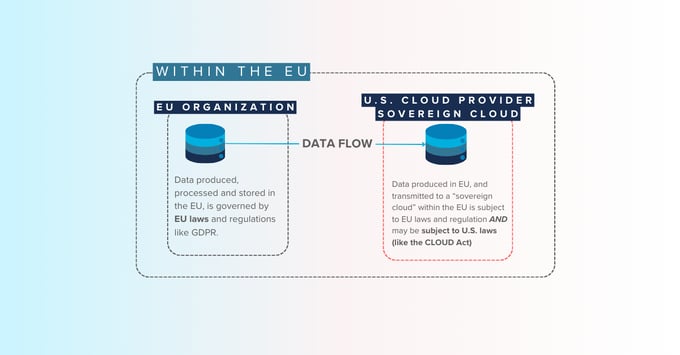
EU data sovereignty when dealing with US provider's

EU Data Sovereignty and U.S. Tech, What to Consider

Sian Parany | May 7, 2025

The European Union (EU) is intensifying efforts to strengthen data governance, enhance data protection, and reduce dependence on U.S. technology..

Read More

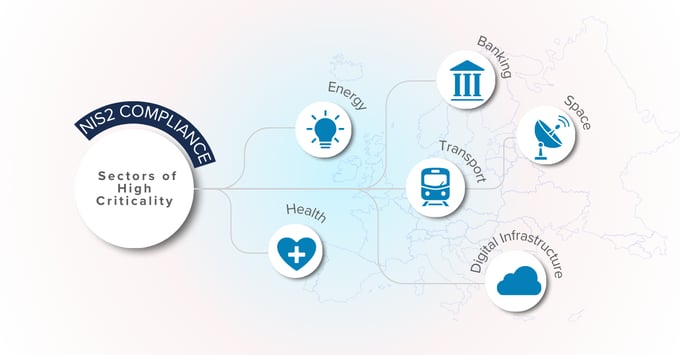
The NIS2 Directive and data security for major industries

The NIS2 Directive, What You Need To Know

Sian Parany | April 10, 2025

The Network and Information Systems (NIS) Directive, introduced in 2016, was the European Union's (EU) first cybersecurity legislation aimed at..

Read More